

Did you know that 60% of buyers say no four times before saying yes, but 48% of salespeople never even make a single follow-up attempt?
This alarming stat highlights a major sales pain point: ineffective follow-ups and poorly aligned strategies. Many businesses waste resources because they don’t align their sales approach with their buyer journey. In 2026, knowing the difference between inbound and outbound sales is more than just good practice; it’s essential to your revenue.
In this blog, we’ll break down inbound vs outbound sales in detail, explore sales strategies, and answer the most common questions like:
What Is the LinkedIn Sales Strategy in 2026?
In 2026, a LinkedIn sales strategy includes both inbound and outbound approaches:
- Inbound: Share inbound content like value posts, polls, carousel content, and videos. Use LinkedIn SEO to boost discoverability.
- Outbound: Run cold call-style sequences via messages and InMails.
LinkedIn allows sales professionals to generate inbound leads through content while simultaneously sending outbound messages to high-value accounts.
This blended strategy reduces friction, boosts conversions, and shortens the sales cycle.
Understanding the Inbound Sales Process
Here’s what the inbound sales process typically looks like:
- Attract: Use inbound marketing content like blogs, videos, and webinars to attract inbound leads.
- Engage: A sales representative reaches out with personalized messages.
- Convert: Use solutions-based messaging to convert the lead into a customer.
What Is an Example of an Inbound Sales Strategy?
Let’s say you create a blog post on “How to improve customer retention using CRM tools.” Someone searches on Google, finds your article, subscribes to your newsletter, and eventually books a demo. That’s inbound marketing feeding your inbound sales funnel.
Tools like HubSpot, LinkedFusion, and LeadCRM allow sales teams to build an inbound sales machine by integrating content, email marketing, and CRM workflows.
Inbound sales strategies require close collaboration between marketing and sales teams. The marketing team attracts traffic; the sales rep nurtures interest.
Exploring the Outbound Sales Process
Despite the rise of inbound, outbound sales are far from dead. In fact, outbound sales allow you to proactively target specific accounts and scale faster.
Here’s a typical outbound sales process:
- Identify: Build a list of target accounts using tools like LinkedIn Sales Navigator.
- Outreach: Send cold calls, emails, or messages.
- Follow-up: Persistently nurture leads through multiple touchpoints.
Outbound sales strategies are essential in B2B, especially when your product has a long sales cycle or requires direct engagement. LinkedIn automation tools help automate cold outreach while ensuring personalization.
Outbound works best for companies with a strong sales team, a clear sales pitch, and the ability to handle rejection without losing momentum.
What Is the Difference Between Inbound and Outbound Sales Strategy?
| Feature | Inbound Sales | Outbound Sales |
|---|---|---|
|
Who initiates the process? |
The buyer |
The sales representative |
|
Tactics used |
SEO, blogs, social media, webinars |
Cold calls, LinkedIn DMs, email outreach |
|
Speed of results |
Slower but long-lasting |
Faster, but requires constant effort |
|
Sales funnel type |
Content-driven |
Script and cadence-driven |
|
Budget use |
High on content, lower on manpower |
High on tools, SDRs, and tools |
|
Lead intent |
High (they’re searching) |
Varies; often cold |
These key differences matter when deciding your go-to-market strategy. If your goal is to build an inbound sales foundation, focus on effective inbound strategies like content and SEO. If you need quick traction, invest in outbound sales.
Reddit users suggest that moving from outbound to inbound on LinkedIn requires a mindset shift—away from cold outreach and toward building authority through thought leadership, sharing value-packed content, and optimizing your profile to draw leads in organically rather than chasing them.
Inbound and Outbound Sales Strategies: How They Complement Each Other
Inbound and outbound sales strategies shouldn’t be seen as competing forces. Instead, they’re complementary approaches within a modern sales funnel.
Here’s how they fit together:
- Inbound marketing efforts warm up your audience with trust-building content.
- Outbound sales efforts give your team direct access to high-value prospects who may not discover your brand otherwise.
When you combine both strategies, you unlock multichannel reach. For example, you can automate inbound follow-ups while simultaneously launching outbound cold campaigns on LinkedIn.
Tip: Use LinkedIn for outbound prospecting, then retarget those leads with inbound content through email or remarketing ads.
Reddit users note that for small B2B businesses, outbound methods like cold emails deliver quicker results, but pairing them with inbound strategies like SEO creates a more sustainable, long-term lead generation engine.
Sales Tools That Power Inbound and Outbound Sales
Inbound Sales Tools
Inbound sales depend heavily on attracting, engaging, and converting leads through content and automation. These tools help you drive consistent, high-quality traffic and turn that attention into action:
- HubSpot: Offers everything from blog hosting to lead scoring and CRM. Perfect for managing the inbound sales funnel.
- Surfer SEO: Helps you optimize your inbound marketing content for visibility on search engines, bringing in more organic traffic.
- Canva: Great for creating engaging visuals, infographics, and inbound content for social media and email campaigns.
- LeadFeeder: Identifies anonymous website visitors so your sales team can proactively reach out with relevant solutions.
Outbound Sales Tools
Outbound sales strategies are most effective when they’re backed by automation, personalization, and targeted outreach. These tools help streamline the entire outbound sales process, from list building to follow-ups:
- Lemlist: Personalizes cold emails with images, videos, and dynamic variables.
- Apollo.io: Great for building targeted lead lists and running automated multi-channel outreach.
- Reply.io: Enables cold email automation, follow-ups, and analytics in one dashboard.
LinkedFusion: Bridging the Gap Between Inbound and Outbound
LinkedFusion is a game-changer for sales teams looking to combine the power of inbound and outbound sales on LinkedIn.
Here’s how LinkedFusion supports Outbound Sales:
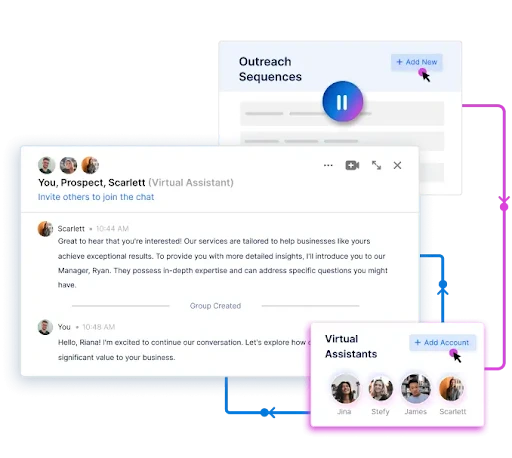
- Automates cold outreach on LinkedIn with customizable messaging sequences.
- Helps outbound sales reps scale outreach efforts while staying within LinkedIn’s daily limits to avoid account bans.
- Supports multichannel workflows by integrating LinkedIn mass messaging with email outreach.
- Enables A/B testing of connection request templates, so your sales team can continuously refine what works.
Here’s how LinkedFusion supports Inbound Sales:
- Allows you to follow up automatically with leads who have engaged with your inbound content (e.g., liked a post, commented, or attended your LinkedIn Live).
- Helps you retarget inbound leads using customized LinkedIn sequences, boosting the chance of conversion.
- Connects seamlessly with CRM tools like HubSpot, Salesforce, Pipedrive, and many more, allowing inbound sales reps to manage conversations and track progress through the inbound sales funnel.
- The Unified Inbox feature consolidates LinkedIn conversations, making it simpler for sales reps to follow up without missing any hot inbound prospect opportunities.
Reddit users point out that LinkedIn outbound fails when you rely on spammy, generic messages, skip personalization, and treat connections as mere numbers rather than real people. To avoid this trap, tools like Linkedfusion help you scale your outreach while keeping it personalized and human. This helps you build genuine relationships, not just contact lists.
Why Sales Teams Use These Tools?
Modern sales teams use a combination of inbound and outbound tools because:
- Inbound attracts, educates, and nurtures leads.
- Outbound initiates conversations with target accounts that haven’t engaged yet.
- Together, they form a full-circle sales approach that meets prospects wherever they are in the sales cycle.
Whether your sales tactic involves nurturing leads through inbound marketing strategies or activating cold accounts via outbound selling, integrating tools ensures you’re not just busy, you’re effective.
Advantages of Outbound Sales: When Speed Matters
While inbound is great for long-term growth, outbound sales offer distinct advantages:
- Speed to market: Need to test an offer fast? Outbound is ideal.
- Scalable outreach: SDRs can hit 50–100 prospects per day.
- Better control: You choose the accounts you target.
That said, outbound selling requires sharp targeting, persistent follow-up, and clear messaging. Without personalization, you risk being ignored or flagged as spam.
Inbound or Outbound Sales: Which One Is Better?
It depends on your goals.
- Choose Inbound if:
You’re focused on building brand trust, have strong content, and want organic leads over time.
- Choose Outbound if:
You’re launching a new product or service, need immediate pipeline traction, or work in industries with long sales cycles.
Many modern businesses use a hybrid approach, also known as inbound vs outbound sales alignment. This involves warming up leads with content, then reaching out with personalized messages via LinkedIn or email.
Ultimately, it’s not about choosing between inbound vs outbound, but about aligning the two to build a more resilient and effective sales strategy.
Things to Consider When Selecting Inbound or Outbound Sales
Here’s what to keep in mind:
- Your team’s strengths: Do you have great writers and a content strategy? Go inbound. A motivated SDR team? Go outbound.
- Sales cycle length: For a long sales process, inbound is better. For transactional sales, outbound works faster.
- Budget and tools: Inbound requires time and tools for content. Outbound needs CRMs, automation, and a skilled sales rep team.
- Type of buyer: Are they actively searching (inbound) or unaware of your solution (outbound)?
Pro Tip: Inbound sales strategy requires patience, while outbound sales demand consistency and targeting.
Conclusion: Inbound vs Outbound Sales—Aligning the Right Strategy with Your Goals
To succeed in 2026, you can’t rely on one-size-fits-all sales strategies. If you’re playing the long game, invest in inbound sales techniques like SEO, content marketing, and social selling. If you need fast results or work in high-ticket B2B, you need an outbound sales strategy backed by automation and personalization.
The best-performing sales professionals don’t choose between inbound or outbound sales—they blend both into a cohesive system.
Want to maximize the potential of your inbound and outbound sales strategies? Tools like LeadCRM give you the best of both worlds—automated outreach and CRM-backed personalization—so you can stop guessing and start growing.