

Sales outreach is the process of proactively contacting prospects via LinkedIn, email, or calls to start conversations and generate opportunities. It helps B2B sales teams build pipeline, engage buyers, and move deals through the sales funnel.
In today’s modern sales strategy, sales outreach is essential for generating a consistent pipeline. Many companies struggle not because they lack tools, but because their sales outreach efforts are not structured or consistent. Instead of waiting for inbound leads, outreach enables a sales team to directly reach decision-makers and create opportunities.
A strong outreach strategy helps businesses define their ideal customer profile, understand buyer pain points, and build a scalable approach to outbound sales. When done correctly, sales outreach becomes a reliable way to start meaningful conversations and drive long-term growth.
How Sales Outreach Works
A successful sales outreach strategy follows a structured sales process. It starts by identifying the right prospect, followed by targeted outreach across multiple channels. Each message is designed to connect with the buyer’s needs and gradually build trust.
In real-world outreach sales, a single message rarely works. Most prospect responses come after multiple follow-ups, which is why sales cadence and timing are critical. Consistent outreach efforts ensure that your sales rep stays visible without overwhelming the buyer.
Sales Outreach Strategies That Actually Work
A strong sales outreach strategy is not just about sending messages, but about following a structured approach that connects with the right prospect at the right time.
Some of the most effective sales outreach strategies include:
1. Multi-Channel Outreach Strategy
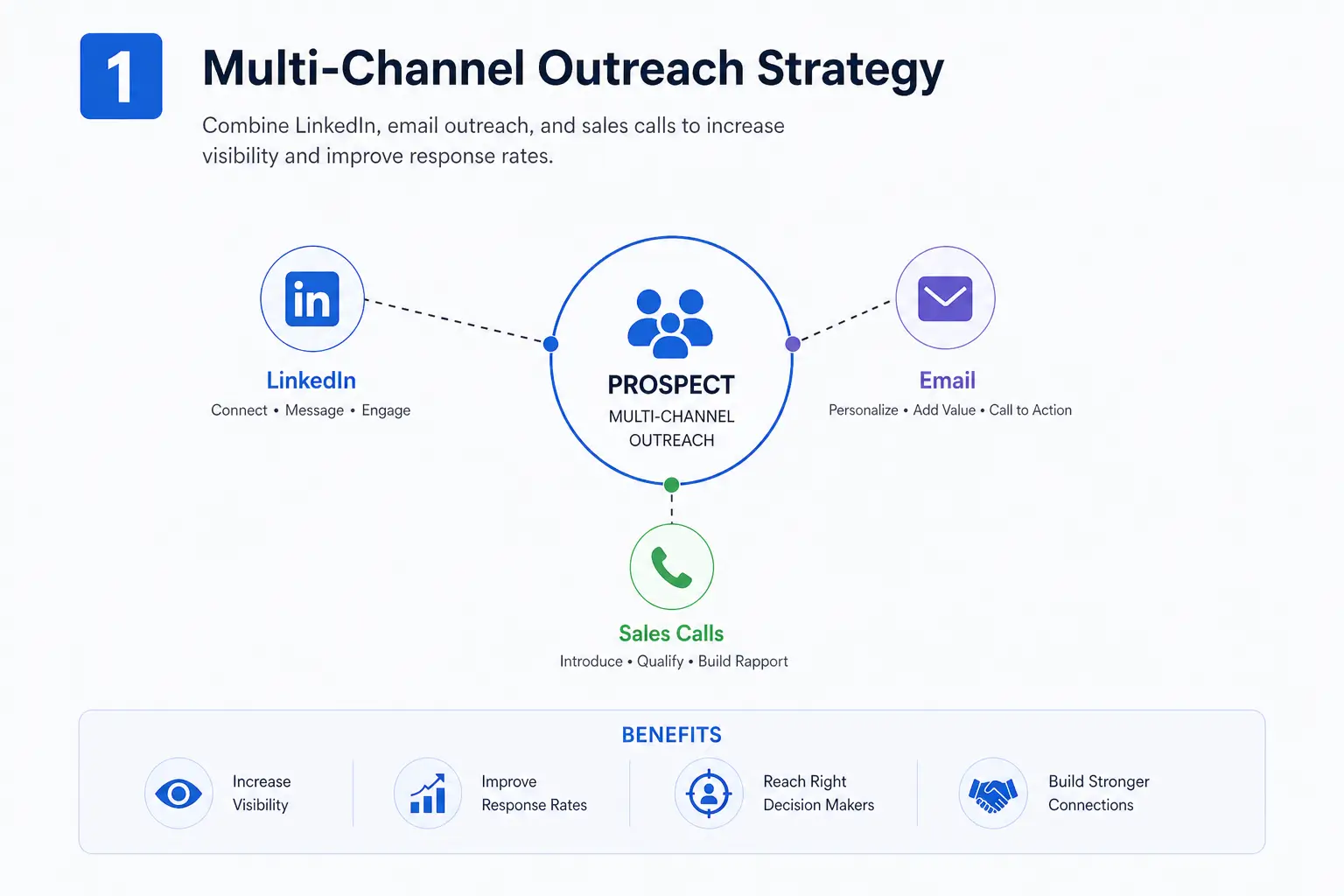
Instead of relying on a single channel, combine LinkedIn, email outreach, and sales calls to increase visibility and improve response rates.
2. Personalized Outreach Strategy
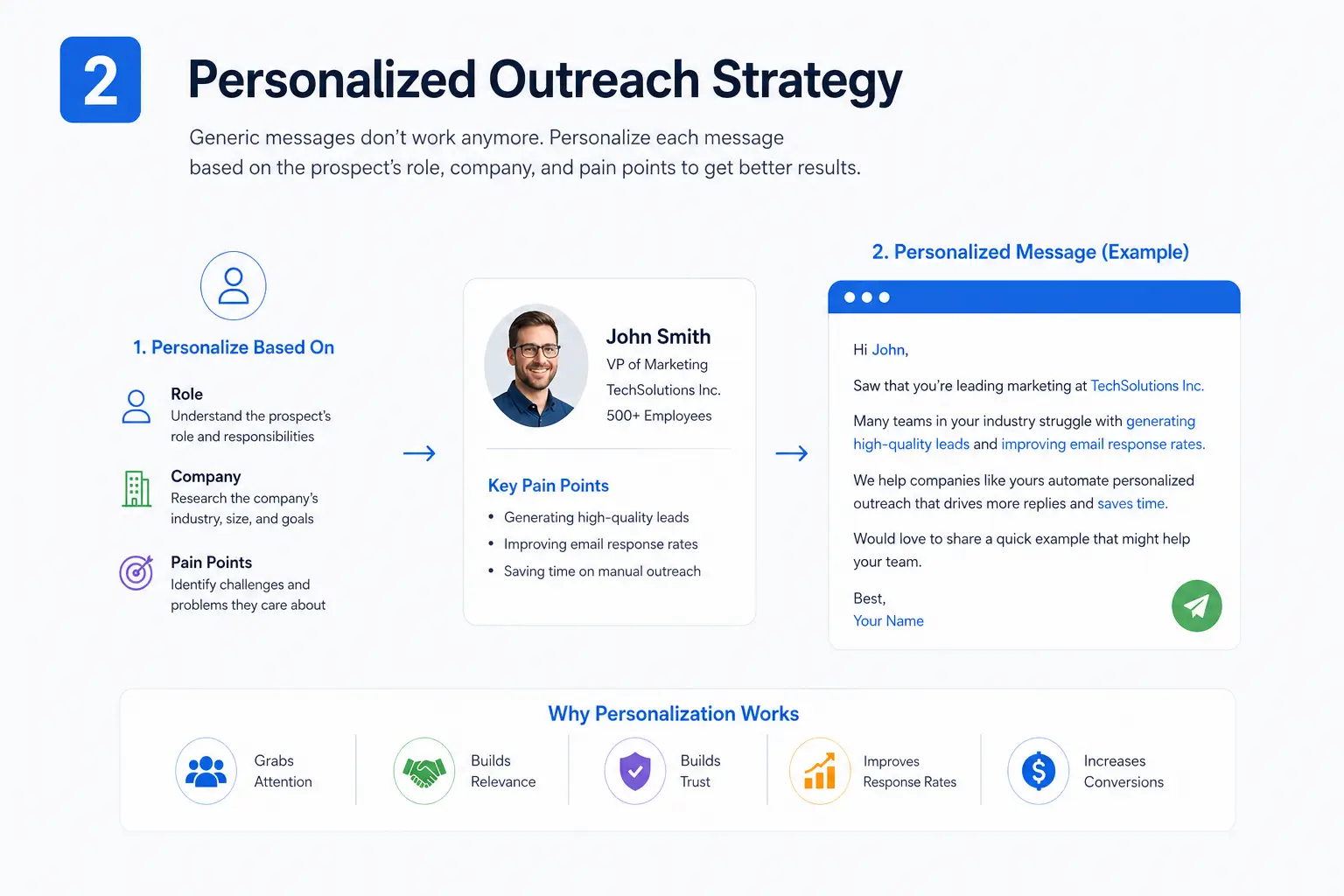
Generic messages do not work anymore. To improve results, sales reps should personalize each message based on the prospect’s role, company, and pain points.
3. Follow-Up Driven Strategy
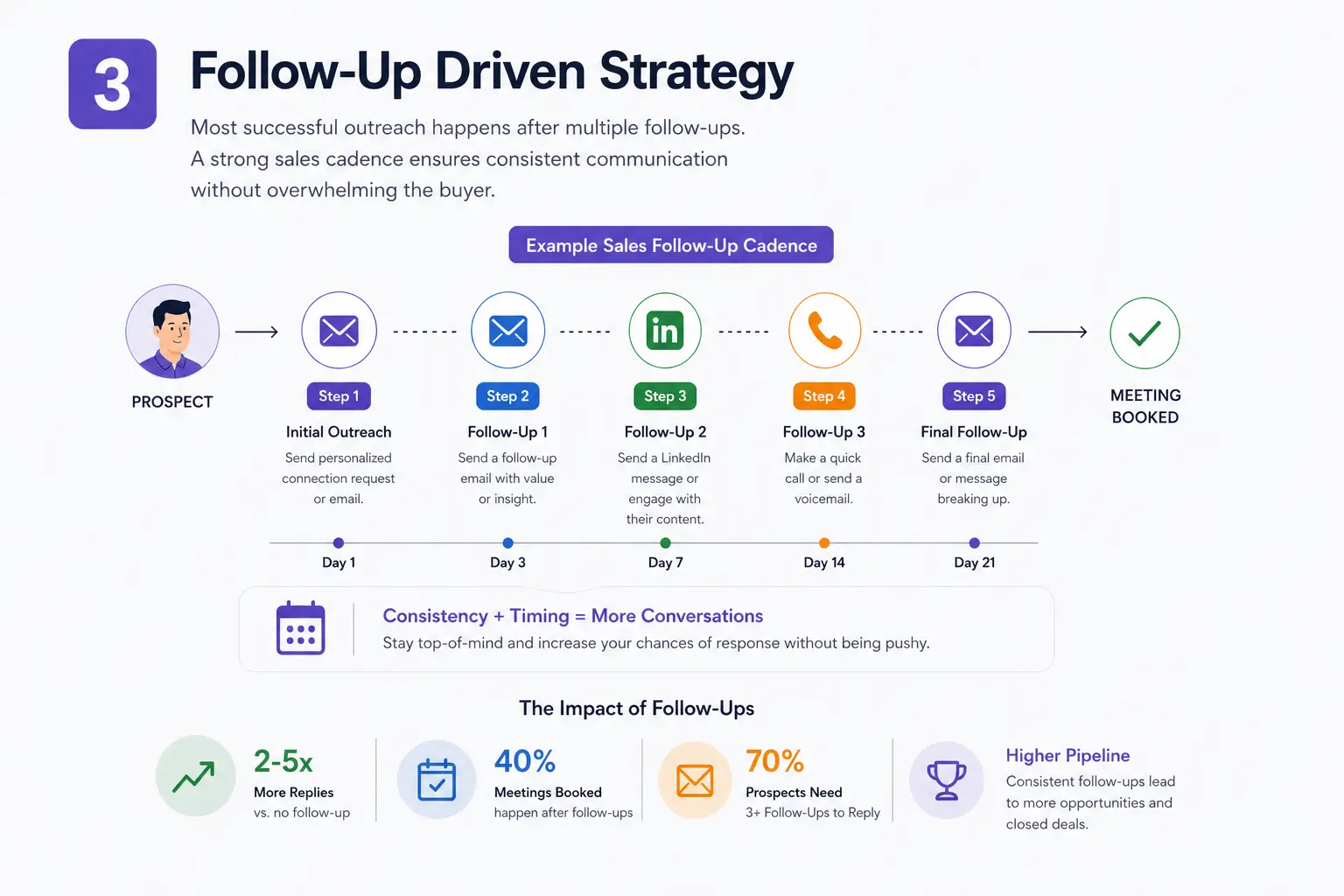
Most successful outreach happens after multiple follow-ups. A strong sales cadence ensures consistent communication without overwhelming the buyer.
4. Value-First Outreach Strategy
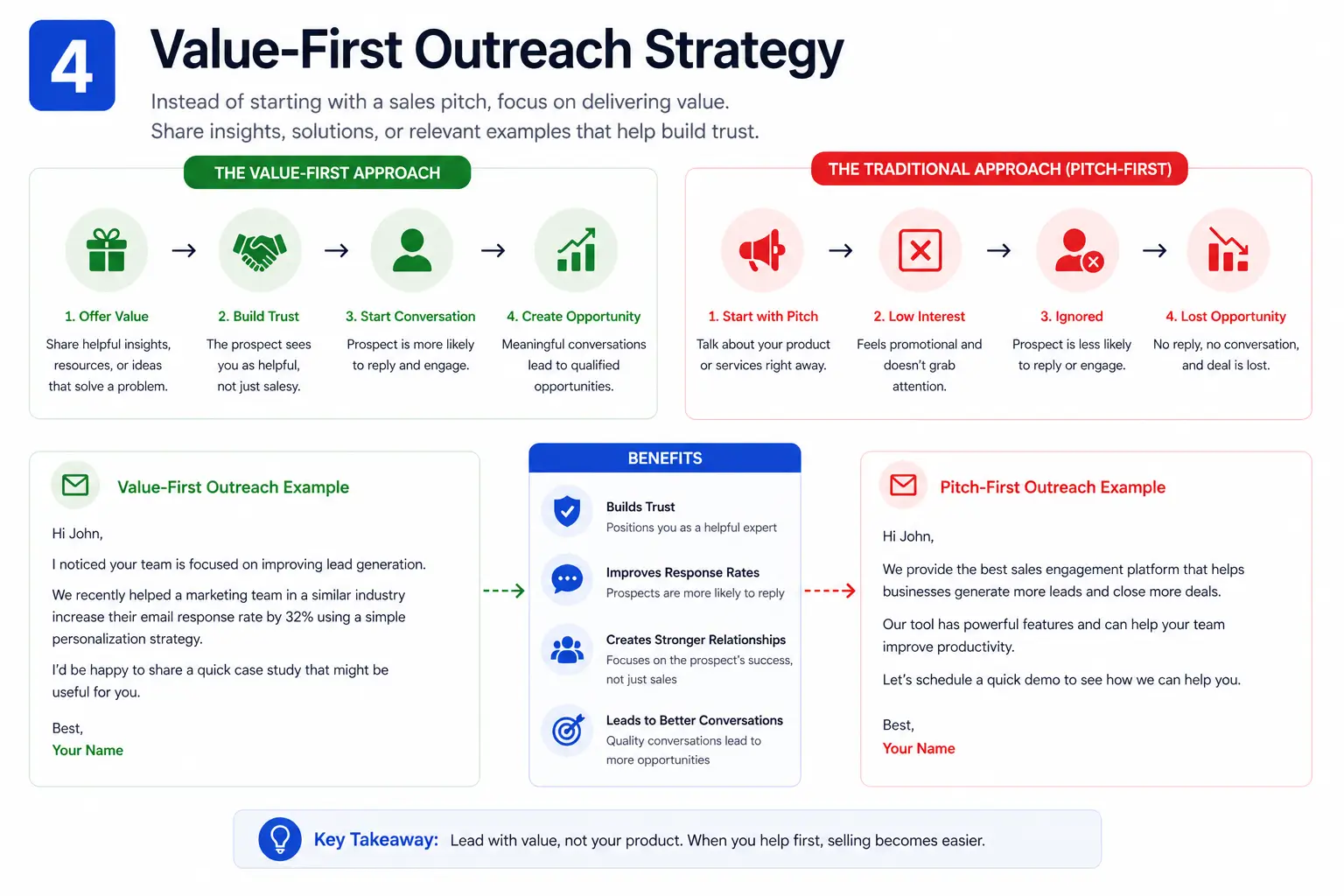
Instead of starting with a sales pitch, focus on delivering value. Share insights, solutions, or relevant examples that help build trust.
5. Data-Driven Outreach Strategy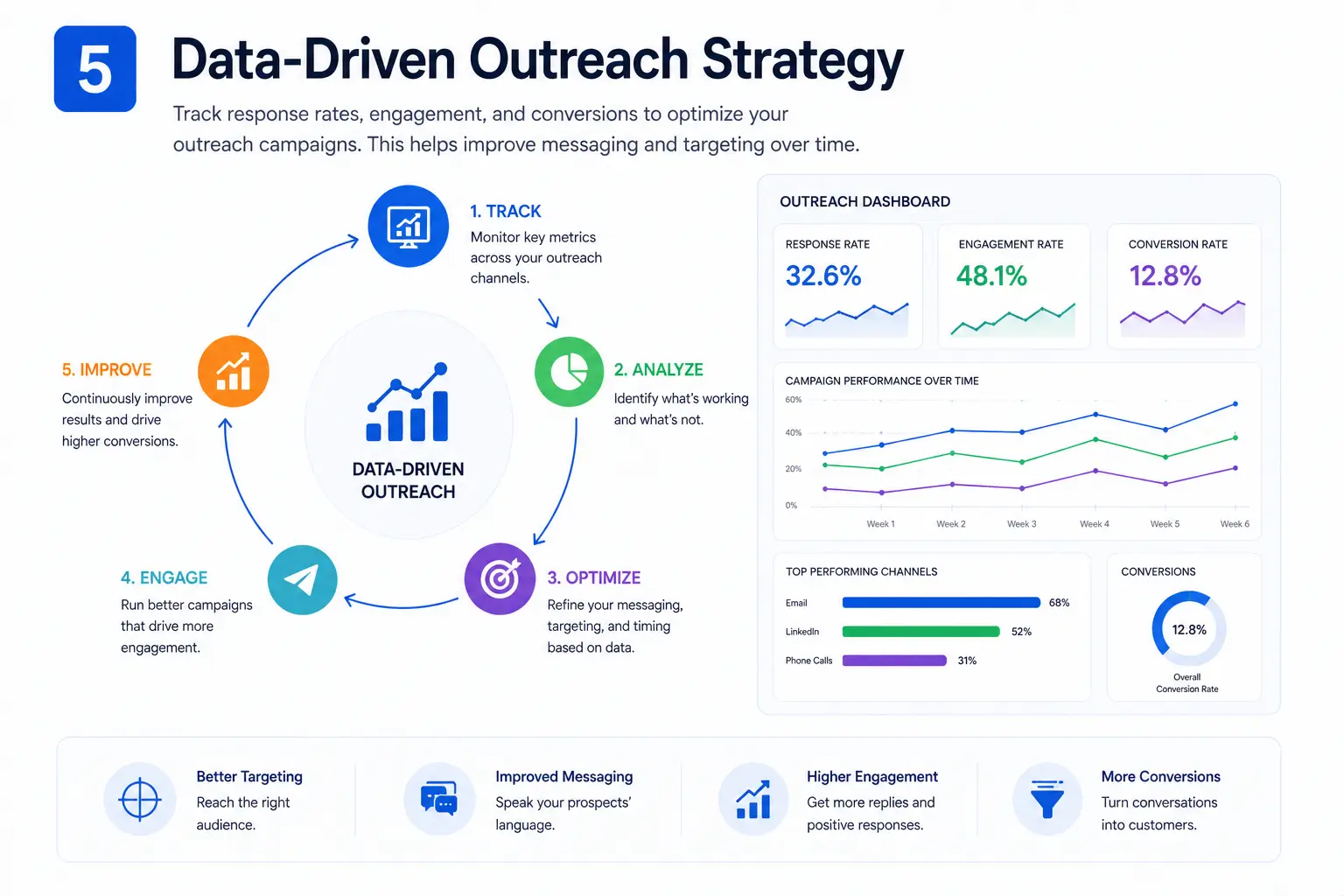
Track response rates, engagement, and conversions to optimize your outreach campaigns. This helps improve messaging and targeting over time.
Why Sales Outreach Matters in B2B Sales
For B2B sales, relying only on inbound marketing can slow down growth. Sales outreach strategies help businesses take control by directly reaching decision-makers.
A strong sales outreach plan helps:
- Build predictable pipeline
- Improve response rates
- Reach the right buyer faster
- Increase sales engagement
- Support alignment between sales and marketing
This is why most sales organizations invest in sales outreach tools and sales enablement systems to scale their outreach.
Real-World Insights on Effective Sales Outreach
In today’s modern sales environment, outreach works differently than before. Based on real experiences and even insights from the state of sales report, a few patterns stand out.
Most prospect replies do not come from the first message. Instead, consistent follow-ups improve response rates significantly. Outreach that focuses on solving buyer pain points performs better than a direct sales pitch.
Platforms like LinkedIn (especially tools like Sales Navigator) are powerful for starting conversations, while email outreach and outreach email sequences help move deals forward. This combination creates a more effective outreach system.
Sales Outreach Channels Explained
LinkedIn Outreach
LinkedIn is one of the most effective outreach channels for b2b sales outreach. It allows a sales rep to connect with a prospect in a more natural way and start a conversation without being overly sales-focused.
Email Outreach
Email outreach is essential for structured communication. A well-written outreach email allows you to share value, explain solutions, and guide the buyer toward the next step.
Calls and Cold Calling
Cold calling and sales calls remain important in outbound sales, especially for quick qualification and direct interaction with a prospect.
Manual vs Automated Outreach
As sales outreach campaigns grow, manual work becomes inefficient. This is where sales automation and outreach automation come into play.
Manual outreach is time-consuming and inconsistent, while automation helps:
- Maintain structured sales cadence
- Improve sales engagement
- Track performance
- Scale outreach efforts
Using ai-powered tools and outreach software, teams can run a strong outreach system without losing personalization.
What Makes Effective Sales Outreach
A good sales outreach strategy focuses on relevance, timing, and consistency. To personalize outreach effectively, each message should reflect the prospect’s role, industry, and challenges.
Key elements of effective sales outreach include:
- Understanding the buyer journey
- Crafting relevant sales messaging
- Using personalization at scale
- Building trust before pitching
- Maintaining consistent follow-ups
This approach leads to successful outreach and long-term customer relationship building.
Sales Outreach Best Practices
Following sales outreach best practices can significantly improve results. The goal is to create targeted outreach that resonates with each prospect.
Some important best practices include:
- Keep your message short and easy to read
- Write subject lines or opening lines that grab attention
- Avoid sending long or overly detailed messages in the first touch
- Always include one clear call to action
- Space your follow-ups properly instead of sending messages too frequently
Common Mistakes in Cold Outreach
Many cold outreach campaigns fail because they lack strategy. Sending generic outreach messages, targeting the wrong prospect, or ignoring follow-ups can reduce outreach success.
To achieve success in sales, teams must:
- Avoid copy-paste messaging
- Improve targeting
- Optimize their sales outreach plan
- Focus on building trust instead of pushing for quick conversions
How LinkedFusion Helps
LinkedFusion is an advanced outreach tool designed for b2b sales teams to scale their outreach campaigns.
It supports:
- LinkedIn outreach automation
- Multi-channel outreach campaign management
- Advanced sales automation workflows
- Integration with CRM and sales engagement platforms
- Performance tracking for better outreach success
By using LinkedFusion, teams can improve sales engagement, run better sales outreach efforts, and create a more efficient sales funnel.
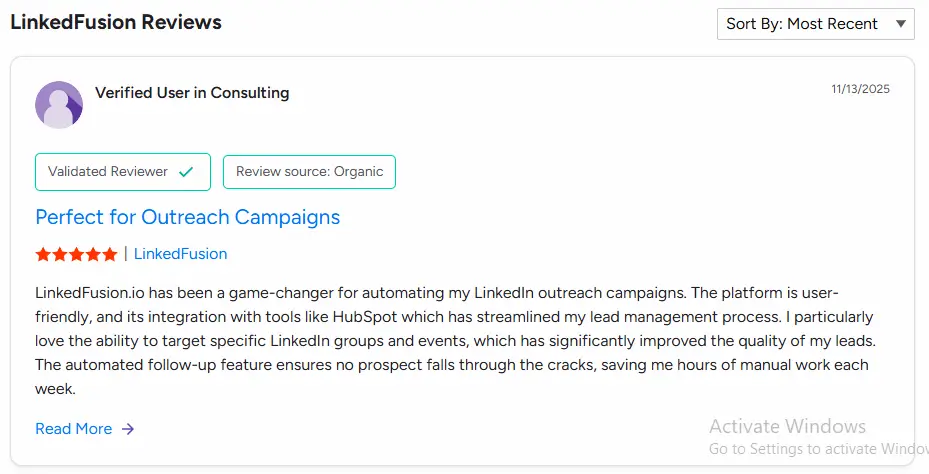
According to a G2 review, LinkedFusion is a game-changer for automating LinkedIn outreach, improving lead quality, and saving hours of manual follow-up work.
Conclusion
Sales outreach is a core part of any modern sales strategy. When done correctly, it becomes a predictable way to generate pipeline, build relationships, and drive revenue.
By combining the right outreach strategy, strong messaging, and tools like LinkedFusion, businesses can create effective sales outreach that delivers consistent results.