

- LinkedIn Sales Navigator is a must-have tool for finding and engaging with high-quality prospects.
- Personalize your LinkedIn messages to increase engagement and build relationships.
- Balance LinkedIn automation with human interaction to keep outreach personal.
- LinkedIn Premium and advanced search filters can greatly improve your prospecting process.
- Consistent follow-ups and providing value first will improve your chances of turning prospects into clients.
If you’re in sales and not using LinkedIn for prospecting in 2026, you’re seriously missing out! With over 900 million professionals on the platform, LinkedIn is a gold mine for finding qualified prospects, building relationships, and driving sales. It’s not just about connecting with anyone—it’s about targeted outreach to the right people at the right time.
In this guide, we’ll break down how LinkedIn prospecting works, share strategies that really hit home, and introduce some killer tools like LinkedIn Sales Navigator. By the end of this, you’ll be all set to step up prospecting on LinkedIn and get those higher ROI results.
What is LinkedIn Prospecting in 2026?
Let’s start with the basics—what exactly is LinkedIn prospecting? Simply put, it’s the process of using LinkedIn to find and connect with your ideal prospects. Instead of cold-calling or emailing strangers, you’re leveraging LinkedIn’s network to engage with decision-makers who are already active and open to business discussions.
In 2026, LinkedIn sales prospecting has evolved into a strategic process where sales reps can:
- Use LinkedIn search tools to filter potential leads.
- Reach out with personalized LinkedIn messages.
- Track interactions to fine-tune their approach.
LinkedIn Prospecting vs. Traditional Sales Prospecting
Old-school sales prospecting methods—like cold calls and emails—are not dead, but they’re a lot harder. People are bombarded with generic pitches and, honestly, they’re tired of it. This is where LinkedIn prospecting shines.
Why choose LinkedIn prospecting over traditional methods?
- Higher engagement: People on LinkedIn are there to network, so you’re already talking to folks who want to connect.
- Better targeting: You can filter by job title, location, industry, and more using LinkedIn search and Sales Navigator.
- Warmer leads: Instead of cold-calling, you can engage with prospects who have shown interest by commenting on posts or joining LinkedIn groups.
Why Use LinkedIn for Sales Prospecting in 2026?
Increased Reach and Targeted Connections
One of the biggest advantages of using LinkedIn for sales prospecting is the ability to reach the right people. LinkedIn Sales Navigator is a game-changer, allowing you to narrow down your search based on:
- Job titles (e.g., CEOs, Directors)
- Industries (e.g., Tech, Finance)
- Locations (e.g., San Francisco, New York)
LinkedIn Premium also gives you access to additional filters, making your prospecting process laser-focused. No more throwing darts at a wall—this is targeted LinkedIn prospecting done right.
Improved Engagement with LinkedIn Prospecting Messages
Sending the same generic message to everyone? Big mistake. In 2026, it’s all about personalization. Tailored LinkedIn messages get way more engagement because they show you’ve done your homework.
Here’s how you can improve your engagement:
- Personalize your message: Start by mentioning something specific to the prospect’s profile or recent activity.
- Provide value upfront: Offer something of value before asking for anything, whether it’s a piece of advice or a resource.
Example Message: “Hey [Name], I saw your post on [Topic] and loved your insights. I’d love to share a few strategies we’ve been using that could help you [solve pain point]. Let me know if you’re open to a quick chat.”
LinkedIn Prospecting Strategies to Implement in 2026
1. Use Boolean Search to Find Prospects on LinkedIn
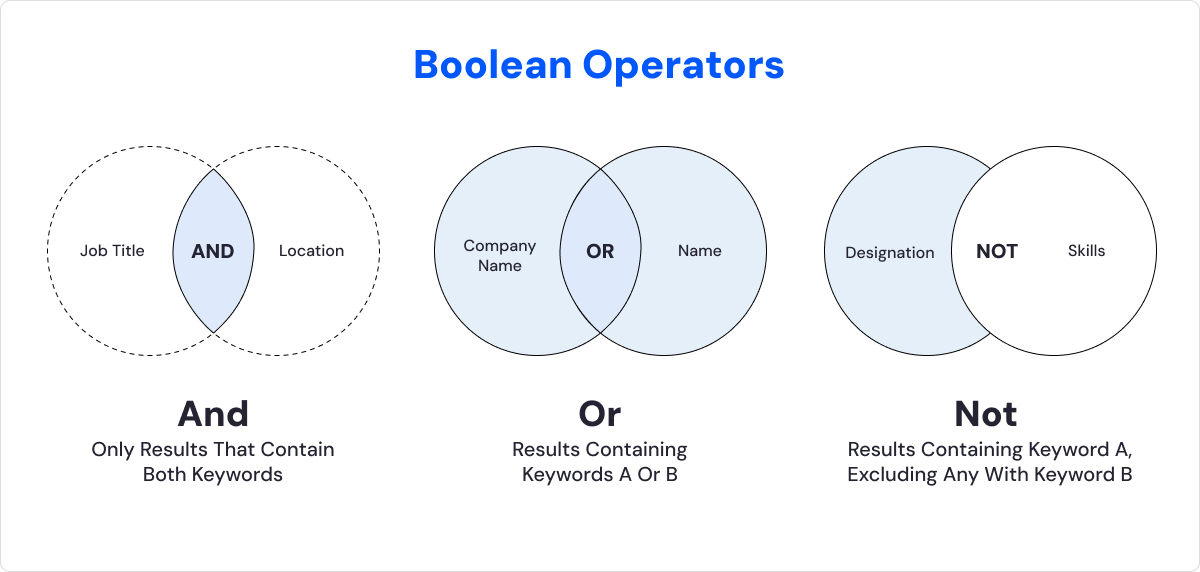
Boolean search is like a secret weapon for sales reps. It lets you refine your search with specific terms, so you’re finding the exact prospects you want.
Example of Boolean Search:
- AND: Find profiles that contain both terms (e.g., “Marketing AND Manager”)
- OR: Expand your search (e.g., “Director OR VP”)
- NOT: Exclude unwanted results (e.g., “Manager NOT Sales”)
This helps you uncover the most relevant leads, saving you from sifting through profiles that aren’t a good fit.
2. Join LinkedIn Groups for Targeted Prospecting
LinkedIn groups are gold mines for finding engaged prospects. Whether it’s an industry-specific group or one focused on a niche topic, these communities offer a way to connect with people already interested in your field.
- Tip: Join relevant groups and contribute by sharing useful content or answering questions. Over time, you’ll become known as a go-to person, making outreach feel more natural.
3. Leverage LinkedIn Events to Find New Prospects
In 2026, LinkedIn events are blowing up. Attending or hosting an event gives you direct access to prospects interested in what you have to offer.
Here’s how to use LinkedIn events for sales prospecting:
- Attend events where your ideal customers are present.
- After the event, follow up with personalized messages to attendees.
- Mention a key takeaway or speaker from the event to make your message stand out.
4. Follow Job Changes on LinkedIn to Find Prospects
Job changes often signal new challenges or goals, which means new opportunities for you. By tracking these changes, you can time your outreach to align with their transitions.
How to leverage LinkedIn job changes:
- Follow up with prospects when they land new roles or are promoted.
- Offer a solution relevant to their new position or responsibilities.
5. Prospect Using LinkedIn Competitors' Network
- Step 1: Look up your competitor’s LinkedIn profile.
- Step 2: Filter their connections by title or industry.
- Step 3: Reach out to these connections with a personalized LinkedIn message.
6. Use InMail Messages for LinkedIn Sales Prospecting
InMail messages allow you to reach out to people who aren’t yet connections. Here’s the trick: keep it personal, short, and focused on their needs.
Example InMail Message: “Hi [Name], I noticed you recently [job change/event]. I’ve been working with companies in your industry to help them [solve a specific problem]. Would you be open to a quick chat to explore how we can do the same for you?”
7. Engage with Prospects' Posts and Content
If you want to get noticed, start by engaging with your prospects’ posts. Commenting on their articles or sharing their content is a great way to warm them up before sending a connection request.
- Tip: Avoid generic comments like “Great post!” Instead, add value by asking a question or expanding on their point.
Tools for LinkedIn Prospecting in 2026
When it comes to prospecting, having the right prospecting tools can make a world of difference. These tools not only streamline your prospecting process but also help you automate certain tasks, so you can focus more on building meaningful relationships with your LinkedIn connections.
1. LinkedFusion: Automate Your LinkedIn Prospecting
First on the list is LinkedFusion, an automation tool that’s perfect for managing multiple LinkedIn prospecting tasks while still keeping things personal. Automation doesn’t have to be impersonal, and LinkedFusion proves that by helping you stay efficient with your LinkedIn outreach.
- Features:
- Multi-campaign support to handle several prospecting strategies at once.
- Time zone scheduling ensures your LinkedIn messages hit at the right moment.
- Real-time analytics so you can track your prospecting efforts and make adjustments to improve your sales process.
With LinkedFusion, you can automate key parts of your LinkedIn prospecting process while ensuring every prospect gets a personalized touch. It’s a must-have for LinkedIn users serious about scaling their outreach efforts.
2. LinkedIn Sales Navigator for Sales Prospecting
- Advanced filters: Easily search for LinkedIn members based on specific criteria like job titles, industries, and more.
- Lead recommendations: Get personalized lead suggestions that match your sales strategy.
- Engagement tracking: See who’s viewed your profile, interacted with your posts, or made a significant job change.
3. Taplio: Automate LinkedIn Prospecting While Keeping It Personal
Automation is crucial for staying efficient, and Taplio allows you to do just that. It helps you automate LinkedIn prospecting while still keeping things personalized, which is critical in a world where no one wants to feel like they’re just part of a mass sales pitch.
Top features of Taplio:
- Automated messaging with personalization fields, ensuring that each LinkedIn connection request feels personal and relevant.
- Content scheduling to keep your LinkedIn profile active and engaging.
- Lead discovery helps you find and connect with the most relevant LinkedIn leads for your prospecting strategy.
If you’re serious about automating your LinkedIn prospecting while still maintaining a human touch, Taplio should be in your toolkit.
4. Skylead for LinkedIn and Email Outreach Automation
- Multichannel outreach: Combine LinkedIn InMails with email sequences to create a powerful prospecting strategy.
- AI-powered insights: Get feedback on your prospecting efforts so you can fine-tune your approach.
- Drip campaigns: Automate follow-ups to ensure consistent engagement with your LinkedIn prospects.
Best Practices for LinkedIn Prospecting Messages in 2026
Your LinkedIn messages are the backbone of your outreach strategy, and getting them right is crucial to converting prospects into clients. Here are some practices for crafting best LinkedIn prospecting messages that resonate with your audience.
Personalize Your LinkedIn Prospecting Messages
Personalization is key in today’s world of sales prospecting. Generic messages simply don’t work anymore, and if you want your prospect to respond, your LinkedIn message needs to be tailored to their needs.
Message Example: “Hey [Prospect’s Name], I saw your recent post on [topic] and thought your insights were spot-on. I’d love to connect and discuss how we can help you with [specific pain point]. Let me know if you have a few minutes to chat!”
By using personalization and focusing on the prospect’s LinkedIn profile or activity, you increase the likelihood of a response and build a genuine connection.
Provide Value First in Sales Prospecting Messages
Before you make your sales pitch, lead with value. Offering a useful piece of information or resource before asking for something in return makes your outreach feel helpful, not pushy.
Value-Focused Message Example: “Hi [Prospect], I noticed that your company has been expanding in [industry]. I thought you might find this [report/resource] useful as it covers the latest trends and strategies for growth in your space. Let me know if you’d like more insights!”
Providing value upfront establishes you as a trusted resource rather than just another sales representative trying to make a sale.
Follow Up Consistently in Your Prospecting Process
LinkedIn prospecting isn’t a one-and-done deal. Consistent follow-ups are essential to keeping the conversation alive. Use tools like LinkedFusion or Skylead to automate your follow-ups, but make sure they’re spaced out and personalized.
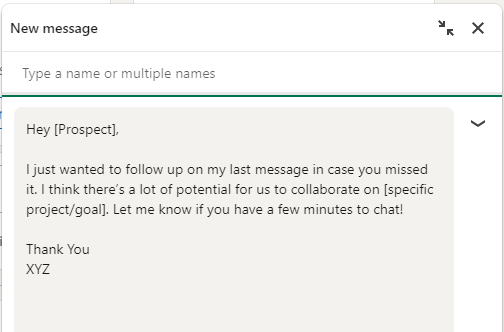
Follow-Up Message Example: “Hey [Prospect], I just wanted to follow up on my last message in case you missed it. I think there’s a lot of potential for us to collaborate on [specific project/goal]. Let me know if you have a few minutes to chat!”
Regular, well-timed follow-ups can make a significant difference in your sales process.
How to Approach a Prospect on Linkedin?
To approach a prospect on LinkedIn effectively, start by personalizing your outreach.
- Research their profile to find common ground, such as shared connections, recent posts, or mutual interests, and reference these in your initial message to establish relevance and build rapport
- Avoid pitching in your first message; instead, focus on starting a conversation by asking thoughtful questions or offering value, such as insights or resources related to their industry
- Follow up consistently with additional value-driven messages to nurture the relationship and increase response rates
LinkedIn Prospecting in 2026: The Do’s and Don’ts
Getting your LinkedIn prospecting right means following some best practices while avoiding common pitfalls. Let’s break down the do’s and don’ts of sales prospecting on LinkedIn.
Do’s of LinkedIn Sales Prospecting
- Do personalize every message: Tailor each LinkedIn connection request and LinkedIn message to the specific prospect.
- Do build relationships first: Engage with your prospects’ posts or content before reaching out with a pitch.
- Do leverage tools like LinkedIn Sales Navigator: Use advanced filters and recommendations to target the most relevant prospects.
- Time is your biggest asset in sales. Tools like Floworks.ai can help automate repetitive workflows—like follow-ups, meeting scheduling, and lead enrichment—so you can spend more time crafting personalized outreach that actually converts.
Don’ts of LinkedIn Sales Prospecting
- Don’t send mass, generic messages: No one responds well to a cookie-cutter message.
- Don’t neglect your LinkedIn profile: An optimized LinkedIn profile with a strong headline is essential for credibility.
- Don’t overuse automation: Tools like LinkedFusion and Taplio are great, but always keep some human interaction in the mix.
Conclusion:
LinkedIn prospecting in 2026 is all about being strategic, efficient, and genuine. Whether you’re using LinkedIn Sales Navigator to zero in on the perfect prospects or relying on LinkedIn automation tools like LinkedFusion or Taplio, success lies in the balance between technology and personalization.
It’s important to remember that while tools can make the process easier, the human touch still drives connections. By focusing on LinkedIn prospecting tips, such as crafting tailored LinkedIn messages and maintaining a well-optimized profile, you’ll be well on your way to converting leads, boosting your sales, and even offering LinkedIn prospecting services to other businesses.
Frequently Asked Questions
How Does Sales Prospecting on LinkedIn Work?
Sales prospecting on LinkedIn allows you to tap into LinkedIn as a professional network, where you can find and connect with potential leads. Using tools like LinkedIn Sales Navigator and the LinkedIn search engine, you can identify your ideal prospects based on specific filters like job titles or industries. It’s a powerful platform for social selling on LinkedIn, giving you a structured way to engage with leads and build meaningful connections.
How Do LinkedIn Messages Help in Sales Prospecting?
LinkedIn messages are a key part of the prospecting process on LinkedIn. When crafted well, prospecting messages on LinkedIn stand out in the LinkedIn inbox and help you engage directly with potential leads. Using personalized sales messages and even LinkedIn voice messages can make your outreach feel more authentic and encourage a response. It’s also important to follow up consistently as part of your outreach with LinkedIn.
How Can LinkedIn Premium Boost Your Prospecting Efforts?
LinkedIn Premium enhances your ability to connect with prospects on LinkedIn by giving you access to additional insights and advanced tools. With Premium, you can track who views your profile, gain more detailed insights about prospects, and use InMail for direct outreach, all of which help streamline the entire sales process. It’s an ideal feature for those who are serious about prospecting and want to take their outreach to the next level.
How Can You Use LinkedIn Sales Navigator for Better Prospecting?
Using LinkedIn Sales Navigator helps sales reps focus on targeted outreach. By utilizing LinkedIn Sales Navigator’s advanced filters and insights, you can identify connections on LinkedIn that are most relevant to your business. This tool helps in combining LinkedIn prospecting with other sales channels, creating a more integrated and effective sales process that gets results.
How Do You Optimize Your LinkedIn Profile for Prospecting?
To successfully optimize your LinkedIn profile for prospecting, ensure your profile highlights your expertise. A strong LinkedIn headline, a professional photo, and consistent posts using LinkedIn Pulse are essential. LinkedIn is a social media platform, so engaging with LinkedIn posts and building a strong network is key. A well-optimized profile makes you more visible and credible to your target audience.
How Does LinkedIn Search Help in Finding Prospects?
The LinkedIn search engine is a powerful tool for locating potential leads based on specific criteria such as industry, job role, or location. It helps you identify new prospects by narrowing down the most relevant profiles in your network. For better results, consider using advanced LinkedIn search filters available through LinkedIn Sales Navigator to find more targeted prospects.
What Are the Best Strategies for Combining LinkedIn Prospecting with Other Tools?
Combining LinkedIn prospecting with other tools can amplify your outreach efforts. By integrating LinkedIn voice messages, email campaigns, and multichannel outreach, you create a stronger connection with leads. Tools that allow you to automate parts of the LinkedIn prospecting process and provide insights can improve your engagement rates across multiple touchpoints, boosting your overall inbound sales efforts.