

When it comes to finding the best social media platform for business, LinkedIn and Facebook are at the top of the list. Each serves a unique purpose, catering to different audiences with tailored tools and features. While LinkedIn is hailed as a professional network ideal for B2B marketing, Facebook appeals to a wider demographic, making it better suited for B2C engagement.
Facebook vs LinkedIn should be observed by all. Facebook is a social networking platform primarily for personal connections, entertainment, and community engagement, while LinkedIn is a professional network focused on career development, business networking, and industry-related content. Facebook offers more casual interactions, while LinkedIn caters to job seekers, recruiters, and professionals looking to build their careers. The choice between the two depends on whether your goals are personal or professional.
In this guide, we’ll break down LinkedIn vs Facebook to help you choose the right one for your business marketing strategy. Let’s dive in!
- LinkedIn is a professional network and a top choice for B2B marketing and professional networking.
- Facebook has a wider range of male and female users, making it ideal for B2C marketing platforms and community engagement.
- LinkedIn offers targeted advertising options, like LinkedIn ads, ideal for lead generation among business professionals.
- Facebook content tends to be more visually engaging, and Facebook groups offer spaces for broader community building.
- LinkedIn groups attract B2B audiences, making it a good idea to use LinkedIn for building professional connections and sharing insights.
LinkedIn vs Facebook: Understanding the Core Audience and User Base
LinkedIn User Base
- Audience: Primarily B2B professionals—including executives, job seekers, and thought leaders.
- Best for: Businesses focused on professional networking, lead generation, and industry insights.
- Example Content: Case studies, thought leadership articles, professional news.
Facebook User Base
- Audience: Diverse demographic, reaching both B2B and B2C users across all age groups.
- Best for: Brands seeking broad audience engagement, brand awareness, and community building.
- Example Content: Visual content, community posts, engaging videos, product announcements.
Why Audience Demographics Impact Business Marketing Strategy
Understanding audience demographics can make or break a marketing strategy. While LinkedIn’s user base is geared toward professionals, Facebook spans a wider range of users, creating different engagement dynamics.
| Platform | Primary Audience | Best for | Example Content Types |
|---|---|---|---|
| Professionals, B2B | Networking, lead generation | Articles, case studies, thought leadership | |
| General public, B2C | Brand awareness, community building | Visual posts, videos, group discussions |
When choosing between Facebook and LinkedIn, it’s crucial to ask yourself: What kind of audience am I trying to reach?
Key Feature Comparison: What LinkedIn and Facebook Offer for Business Marketing
Both platforms offer unique features designed to meet specific business needs. Here’s how they compare:
LinkedIn for Business:
- Professional Networking: Connect with industry experts and potential B2B clients.
- LinkedIn Learning: Enhance skills and offer professional development.
- LinkedIn API: Ideal for B2B tools like CRMs, integrating professional data seamlessly.
Facebook for Business:
- Brand Pages: Build brand awareness and create a space for followers to engage.
- Facebook Groups: Community-focused, enabling brands to connect with users on a personal level.
- API for Social Sharing: Supports dynamic content sharing and engagement for B2C.
| Feature | ||
|---|---|---|
| Networking | Professional, B2B | Community-focused, B2C and B2B |
| Content Types | Articles, professional insights, sponsored posts | Visuals, interactive posts, product promos |
| API Use | Professional integration (e.g., CRMs, recruiting) | Social sharing, app development |
LinkedIn vs Facebook Ads: Which Platform Suits Your Ad Campaign Goals?
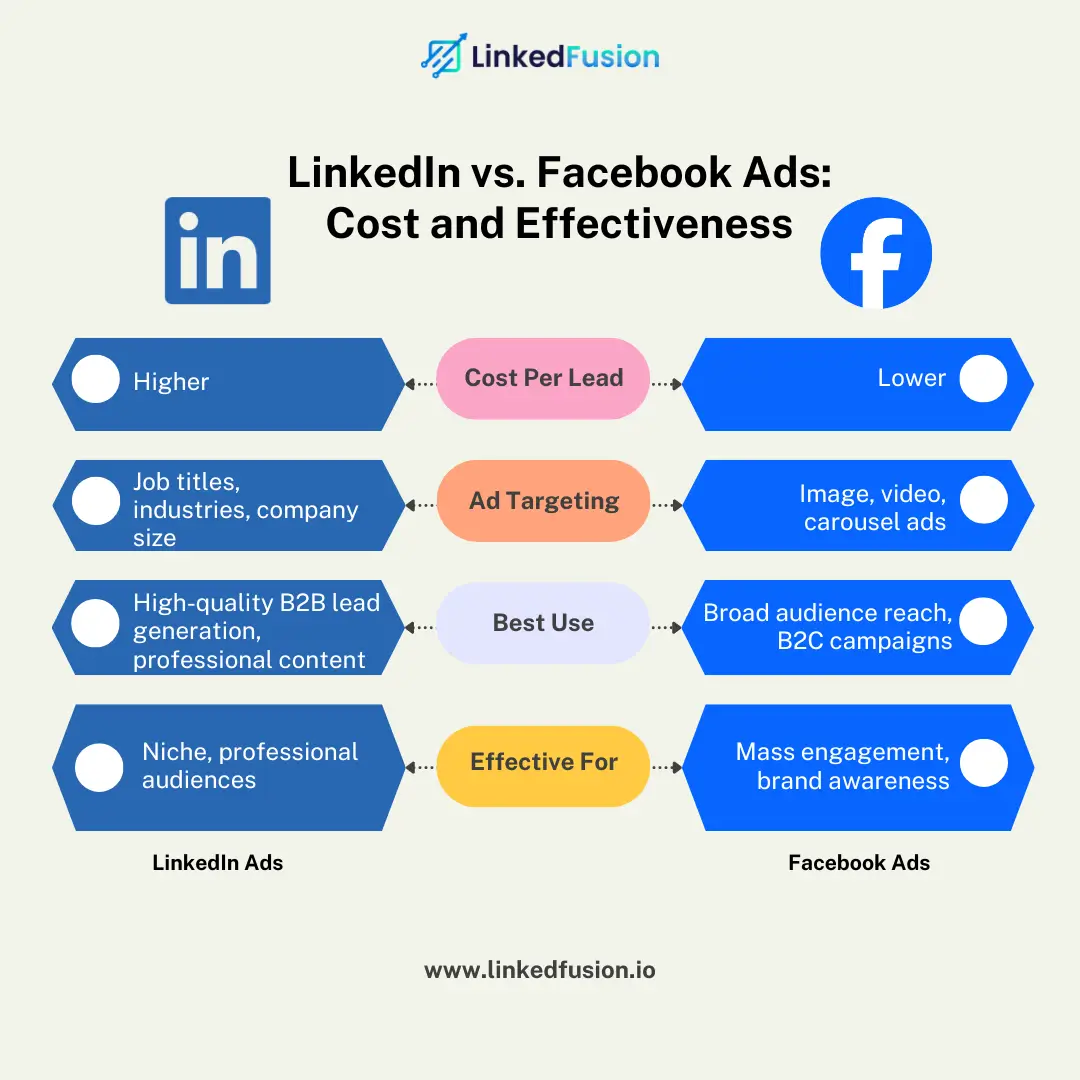
Advertising on linkedin vs facebook has stark differences. Advertising on LinkedIn is ideal for B2B marketing, targeting professionals, businesses, and decision-makers, with advanced options like job titles, industries, and seniority. Facebook advertising, on the other hand, is better suited for B2C marketing, offering broader audience targeting based on interests, behaviors, and demographics. LinkedIn typically has higher ad costs but delivers better results for professional audiences, while Facebook offers more affordable options for reaching a diverse consumer base. When comparing LinkedIn ads vs Facebook ads, the differences are clear in terms of targeting options and ROI.
Targeting Options:
- Facebook Ads: Uses detailed behavioral targeting based on user interests, making it ideal for B2C campaigns.
- LinkedIn Ads: Offers precise targeting based on job title, industry, and professional status, perfect for B2B advertising.
Cost and ROI Considerations:
- LinkedIn ads : tend to have higher costs but offer a strong ROI for B2B brands looking for qualified leads.
- Facebook ads : provide a more budget-friendly approach, with flexible options for small businesses focused on brand awareness.
Differences in Ad Formats
| Ad Format | ||
|---|---|---|
| Sponsored InMail | Direct messaging for personalized B2B outreach | Not available |
| Video Ads | Effective for professional B2B content | Great for B2C visual engagement |
| Carousel Ads | Works for showcasing multiple B2B messages | Engaging for product images and visuals |
LinkedIn’s Sponsored InMail ads are a top choice for B2B lead generation, allowing businesses to reach out directly to specific job titles and industries.
Facebook Groups vs LinkedIn Groups: Community Building and Engagement
For community building and user engagement, Facebook Groups vs LinkedIn Groups each offer unique opportunities.
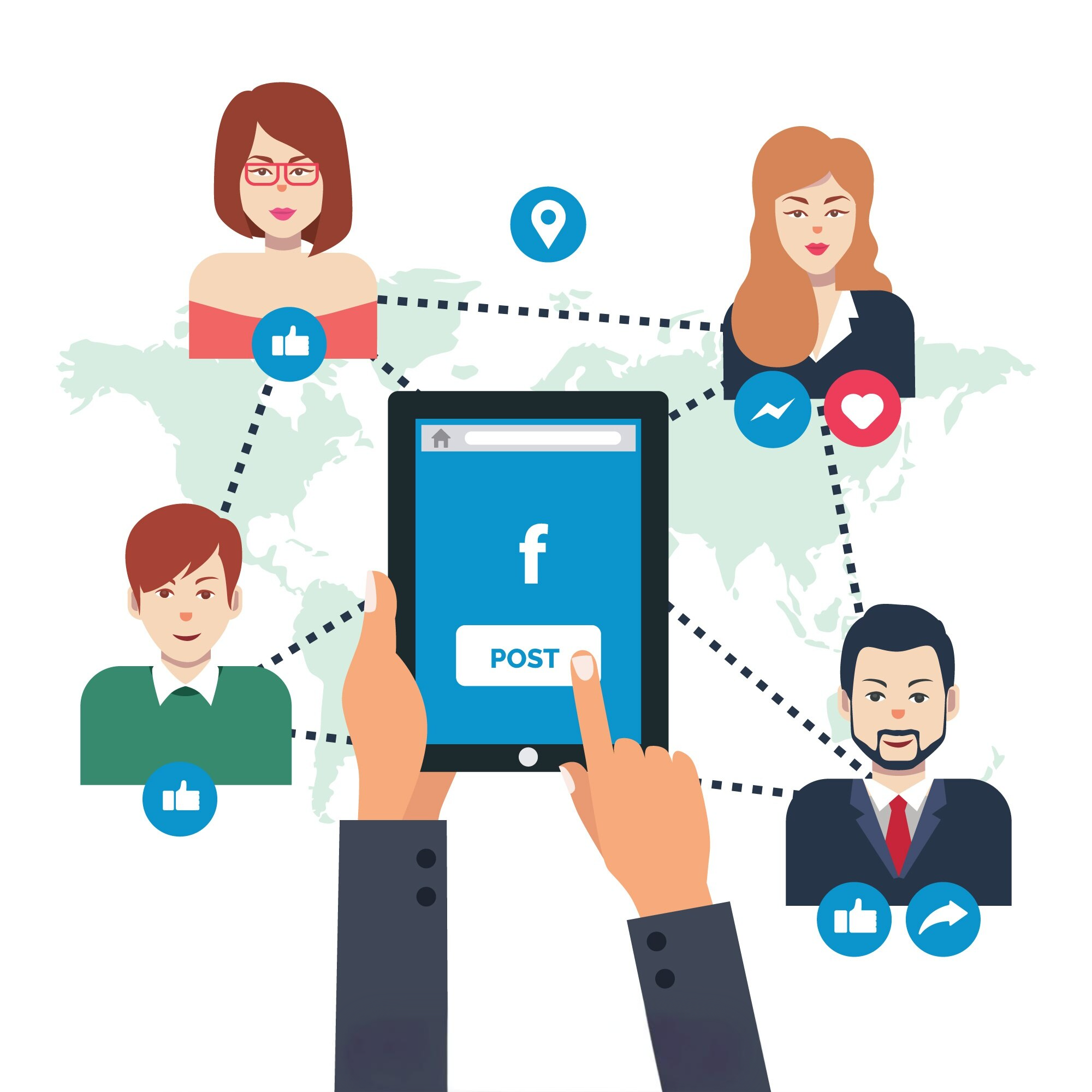
Facebook Groups: Best for brand awareness and community engagement with a B2C focus. They’re ideal for businesses that want to create spaces for fans and followers to discuss, share, and connect.
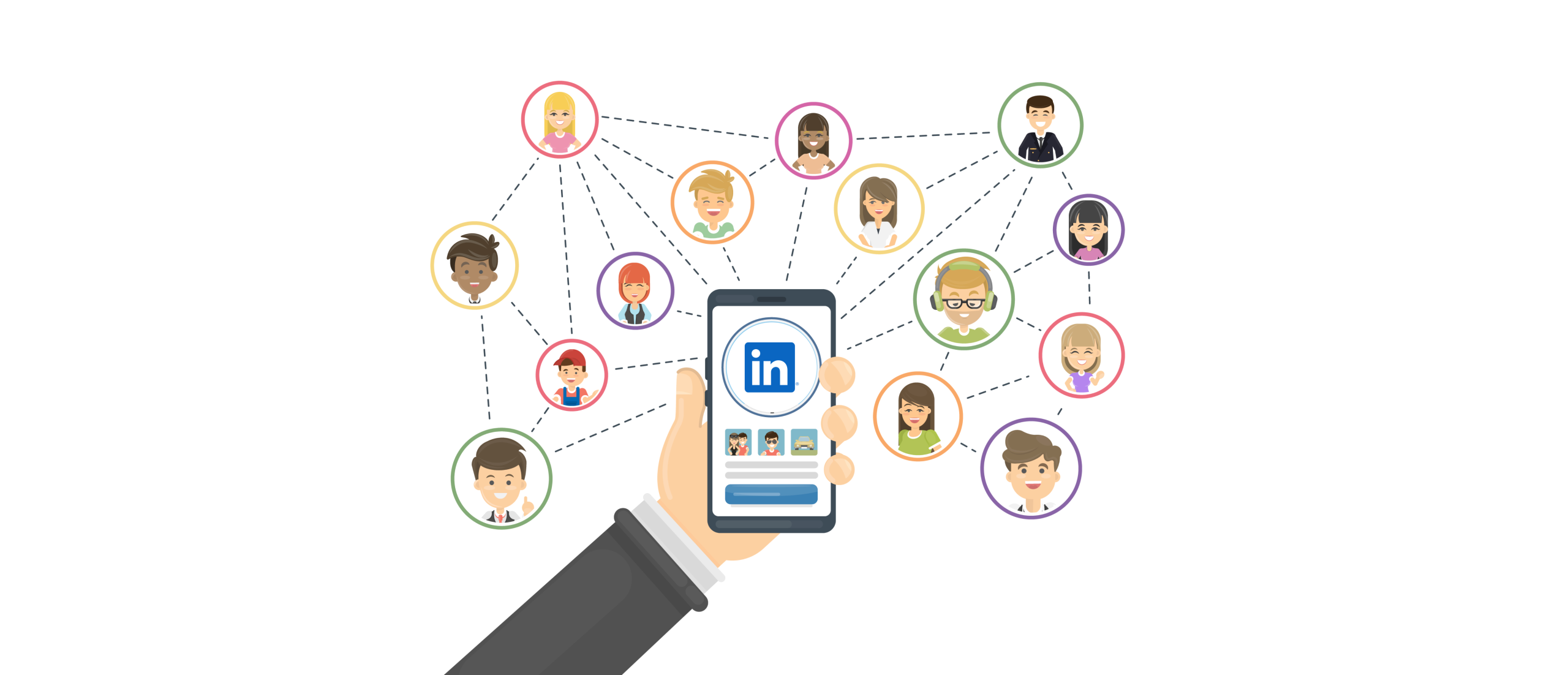
LinkedIn Groups: Primarily professional networking spaces where industry peers connect, discuss topics, and share insights, making it a great choice for B2B businesses.
| Platform | Purpose | Ideal For |
|---|---|---|
| Brand awareness, community focus | B2C brands wanting user engagement | |
| Professional networking, B2B focus | B2B brands targeting industry peers |
Comparing Engagement Rates: Facebook vs LinkedIn Groups
Engagement rates in LinkedIn and Facebook Groups vary significantly. Facebook’s casual, community-driven atmosphere tends to encourage more frequent interaction, while LinkedIn Groups cater to professional discussions, resulting in fewer but more substantial engagements.
Which Platform is More Cost-Effective for Small Businesses?
Cost-effectiveness is a significant factor, especially for small businesses with limited budgets.
- LinkedIn Ads: Higher CPC but laser-focused B2B targeting.
- Facebook Ads: Lower CPC with broader reach, making it ideal for businesses targeting diverse audiences.
Tips to Maximize Your Ad Spend:
- On LinkedIn: Focus on job title targeting and Sponsored InMail for high-quality leads.
- On Facebook: Use carousel ads and video ads to engage users and spread brand awareness effectively.
| Platform | Ad Cost | Best Use Case |
|---|---|---|
| Higher CPC | B2B targeting, lead generation | |
| Lower CPC | B2C targeting, broad engagement |
B2B Marketing Linkedin vs Facebook
For B2B marketing, LinkedIn is more effective due to its professional audience and targeting options, such as job titles, industries, and company sizes. Facebook, while primarily a B2C platform, can still be used for B2B marketing with broader targeting based on interests and behaviors. LinkedIn typically delivers higher-quality leads for B2B campaigns, though at a higher cost compared to Facebook.
LinkedIn’s B2B Focus
LinkedIn is primarily a professional network designed for businesses looking to connect with other businesses and industry professionals. Here’s why LinkedIn is ideal for B2B marketing:
Professional Connections: Allows businesses to reach executives, managers, and decision-makers.
Job Ads and Recruitment: LinkedIn’s recruitment tools make it easy for companies to post job ads targeted at the right professionals.
Industry Connections: LinkedIn Groups and InMail messaging enable networking with relevant industry contacts, boosting credibility and brand authority.
Facebook’s Role in B2C and Community Marketing
Facebook is better suited for B2C marketing and building brand loyalty among a broader audience. It excels in:
- Customer Engagement: Facebook Groups and Pages allow brands to interact directly with consumers, creating a loyal following.
- Brand Loyalty: Through engaging Facebook ads and content, businesses can foster long-term customer relationships.
- Community Focus: Facebook Groups are great for nurturing communities where customers can discuss products, ask questions, and share experiences.
How LinkedIn and Facebook Compare in B2B and B2C Marketing
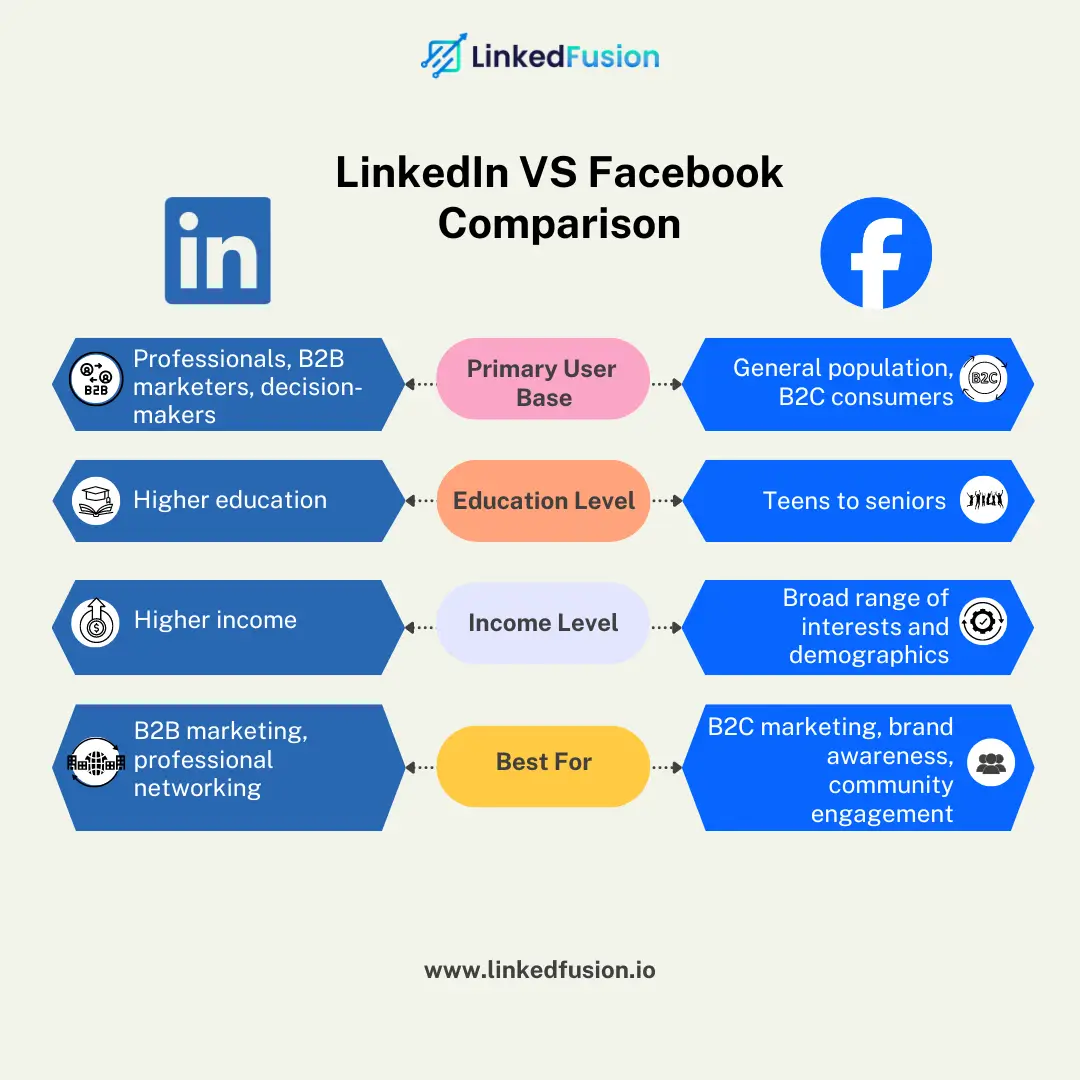
Each platform has strengths in different types of social media marketing. Here’s a quick comparison to highlight LinkedIn vs Facebook in B2B and B2C scenarios.
| Platform | Best For | Key Features | Example Use Case |
|---|---|---|---|
| B2B marketing | Job ads, industry connections, professional network | SaaS company looking to connect with business clients | |
| B2C marketing | Brand pages, Facebook Groups, social sharing platform | Retail brand building a community of loyal customers |
When deciding between LinkedIn and Facebook for business, consider whether your target audience includes other businesses (B2B) or consumers (B2C).
LinkedIn and Facebook for Brand Awareness: What’s the Difference?
Establishing brand awareness looks different on LinkedIn compared to Facebook, due to each platform’s unique structure and audience.
Building Thought Leadership on LinkedIn
LinkedIn is designed for thought leadership and building professional credibility. Businesses can:
- Share Industry Insights: Regular posts sharing insights help establish expertise.
- Professional Profile Creation: LinkedIn profiles act as resumes, building credibility in the professional network.
- Use LinkedIn Articles: Longer articles allow brands to share deep dives into industry topics, attracting professional followers.
LinkedIn’s structure supports a content strategy focused on educational, informative content that showcases your brand’s expertise.
Building a Broad Audience on Facebook
Facebook’s focus is on engaging a broad social network and fostering brand awareness across multiple demographics. It’s perfect for:
- Visual Content: High-quality images and videos capture attention in Facebook’s feed.
- Engaging Ad Formats: Carousel ads, video ads, and event promotions keep the audience engaged.
- Cross-Generational Reach: Facebook spans generations, allowing brands to connect with audiences of all ages.
In a nutshell, Facebook is ideal for B2C brands that want to reach a wide audience, while LinkedIn is better for B2B brands looking to position themselves as industry experts.
The Role of Content Strategy in LinkedIn vs Facebook Marketing
Your content strategy on LinkedIn and Facebook should reflect the unique strengths of each platform.
| Platform | Content Focus | Ideal Content Types | Objective |
|---|---|---|---|
| Thought leadership, B2B | Articles, professional posts | Build authority, generate leads | |
| Engagement-driven, B2C | Visual posts, community-driven content | Drive brand awareness, foster loyalty |
LinkedIn content strategies focus on professional insights and industry news, while Facebook strategies prioritize engaging visuals and user interaction to build brand awareness.
Frequently Asked Questions: LinkedIn vs Facebook
Is it possible to do LinkedIn Ads and Facebook Ads for my business?
Absolutely! A lot of businesses use both platforms to interact with their target audience — more specifically, different parts of it.
Is LinkedIn or Facebook better for B2B advertising?
LinkedIn is arguably more effective for B2B businesses as its ad targeting capabilities allow you to reach professionals based on job titles, industries, and companies.
Is Linked in for only B2B marketing or can it work for B2C too?
LinkedIn is inherently a B2B platform, though it can be leveraged for high-ticket B2C marketing in certain industries such as finance, education and real estate.
The discussion about Facebook Groups vs. LinkedIn Groups: Which one has better engagement?
Facebook Group enjoys more engagement because the environment is more relaxed, community-focused while LinkedIn Groups are more topic-driven, professional.
So, which platform is best for small businesses with little budget?
On the other hand, Facebook is usually best for small businesses on a budget since you can still get affordable access to mass audiences through Facebook ads.
Conclusion
So, when talking about LinkedIn vs Facebook it all depends on what your business goals are and who your target audience is. Here’s a quick recap:
- When it comes to B2B marketing, thought leadership, and building a professional network, LinkedIn is the platform of choice.
- A social network that shines in B2C, loyalty, and community: Facebook.
To get the best results, use both platforms as part of a social media marketing strategy. You will be able to capitalize the B2B power of LinkedIn and the extensive B2C potential of Facebook to skyrocket brand awareness, diversify your audience engagement, and accomplish all your marketing objectives.