

Managing HR is no walk in the park. From juggling employee data to processing leave requests, traditional HR processes often involve tedious administrative tasks that drain valuable time and increase the likelihood of human error. For many HR professionals, manual HR processes lead to inefficiencies that ripple across the organization, affecting everything from recruitment to employee engagement.
In this blog, we’ll explore the 5 common HR pain points that slow down your human resource team and how workflow automation can help HR departments overcome these challenges. By the end, you’ll understand how to streamline HR operations and empower your HR team to focus on strategic initiatives instead of monotonous tasks.
Why Human Resource Teams Struggle Without Automation?
Before diving into the specific pain points, it’s essential to understand why manual HR processes often fail. Most HR professionals still spend excessive time on tasks like onboarding, payroll processing, and leave management, all of which can be automated for greater accuracy and efficiency.
When these functions are done manually, HR professionals are left drowning in paperwork, bogged down by compliance challenges, and unable to focus on more strategic initiatives such as improving employee satisfaction or driving engagement. That’s where HR automation tools and workflow systems come in.
Reddit users say that HR automation tools can streamline onboarding, offboarding, and internal communications but warn that over-automation risks depersonalizing the employee experience.
HR Automation
byu/Cbergs inhumanresources
5 Common HR Pain Points
1.) Inefficient Onboarding That Hurts First Impressions
One of the most common HR pain points is a clunky onboarding process. Manual onboarding often leads to lost documents, delays in access setup, and inconsistent training, creating a poor experience for new hires.
Workflow automation enables HR teams to streamline onboarding by automatically triggering coldreach emails, welcome emails, assigning tasks to relevant departments, collecting digital signatures, and storing employee data securely in one place. This ensures seamless communication between departments and delivers a consistent experience that makes a strong first impression.
How do you automate onboarding in HR? You can use HR software integrated with digital forms, checklists, and automated reminders to guide new employees through every step.
2.) Manual Payroll Processing Leads to Errors
Payroll management is another critical HR function riddled with complexity and human error when done manually. From tax calculations to salary revisions and compliance reporting, payroll demands precision.
With automation, HR teams can automate payroll calculations, generate payslips, and ensure tax compliance. All while significantly reducing operational costs. Real-time syncing between HR systems and finance teams boosts transparency and eliminates errors.
Automation ensures employee information is accurate, secure, and updated automatically, which supports effective HR practices and minimizes the risk of compliance issues.
3.) Leave Management Becomes a Time Sink
Leave requests might seem simple, but managing them across teams and locations without automation can quickly become chaotic. Manual leave management often involves back-and-forth emails, tracking spreadsheets, and a high risk of overlapping or missed entries.
Automated HR systems enable self-service portals for employees to apply for leave, check balances, and track approvals. Managers and HR professionals receive instant notifications, and the system updates calendars and workflows accordingly.
This not only improves productivity but also enables managers and employees to maintain better visibility and seamless communication regarding absences.
4.) Lack of Real-Time Data for Performance Management
Performance management is another vital aspect of HR that suffers from manual HR systems. Gathering feedback, tracking goals, and preparing performance reviews can take up an excessive amount of time, especially without real-time data.
By implementing HR automation tools, companies can set up automated reminders, digitize review templates, and gather feedback consistently. Analytics dashboards provide HR teams with actionable insights that help them make informed decisions about promotions, upskilling, or changes in team structure.
What problems does automation solve in recruitment and HR? Automation improves data accuracy, accelerates the hiring process, and ensures compliance, solving bottlenecks in recruitment, onboarding, and beyond.
5.) Administrative Tasks Overload the HR Team
Administrative overload is one of the top reasons HR departments struggle to stay strategic. From updating employee data to managing resource management, traditional HR often wastes time on repetitive tasks that don’t contribute to business growth.
With workflow automation, HR professionals can offload repetitive and administrative tasks to smart systems. This allows the HR team to focus on more impactful initiatives like book meetings, culture-building, employee engagement, and succession planning.
For instance, HR can set up automated alerts for contract renewals, birthdays, policy changes, or legal compliance updates — all without lifting a finger.
How Workflow Automation Transforms HR Functions?
Now that we’ve explored the 5 common HR pain points, it’s clear how workflow automation is reshaping the landscape for HR teams. Let’s look at a few more ways automation transforms recruitment operations.
Automating Recruitment Workflows in LinkedIn
The hiring process is lengthy and requires coordination between recruiters, hiring managers, and candidates. The recruitment process on LinkedIn is significantly streamlined through automation by eliminating manual, repetitive tasks and enabling faster, more targeted engagement with candidates.
With automation tools, recruiters can automatically send personalized connection requests, follow-up messages, and InMails, ensuring timely, consistent outreach without manual effort. These tools also track responses, schedule interviews, and update candidate data in real-time, allowing HR professionals to manage their pipeline more efficiently.
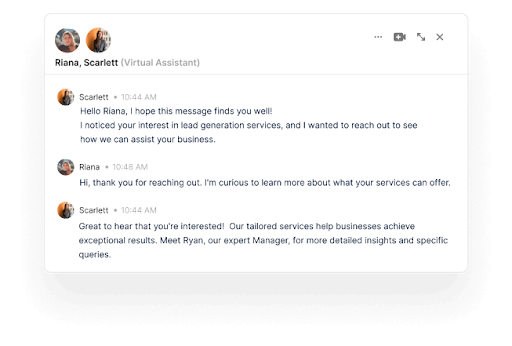
As a result, recruiters can focus on evaluating talent and making strategic hires, while automation handles the operational load, shortening time-to-hire and improving overall recruitment outcomes on LinkedIn. This not only reduces time-to-hire but also helps HR maintain a professional and consistent candidate experience.
Reddit users say automation can streamline HR workflows by cutting down manual tasks and errors—yet many warn it’s crucial to preserve the human touch.
How Automation Can Improve HR Workflows?
byu/crowcanyonsoftware inHumanResourcesUK
Integrating HR Software for Overcoming HR Pain Points
In today’s HR landscape, using multiple disconnected tools can lead to data silos, double work, and missed opportunities. Integrating different HR software platforms is critical for achieving seamless workflows and reducing manual processes. But integration alone isn’t enough—you need automationalignslfills with your goals and delivers measurable results.
That’s where LinkedFusion stands out.
LinkedFusion’s automation engine empowers HR professionals and recruiters to streamline outreach, eliminate repetitive tasks, and focus on what truly matters—building relationships with top talent. Instead of manually chasing candidates, HR teams can leverage LinkedFusion’s smart outreach automation to boost efficiency and response rates.
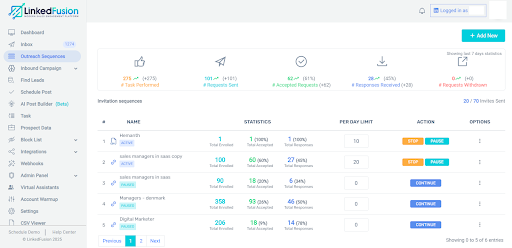
Here’s how LinkedFusion’s 5-Step Outreach Sequence Works for HR:
1️⃣ Invitation Sequence
Automatically send personalized LinkedIn connection requests based on role, industry, or skillset. This not only improves your reach but also creates a stronger first impression with targeted messaging.

2️⃣ InMail Sequence
Reach candidates even outside your LinkedIn network using AI-personalized InMails. These tailored messages cut through the noise of overcrowded inboxes and grab attention quickly.
3️⃣ Follow-up 1
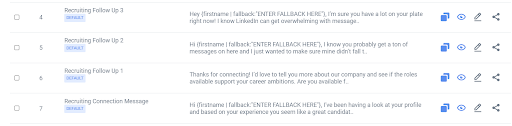
If there’s no initial response, the first follow-up is automatically sent after your chosen delay, helping you stay top of mind without the manual effort.
4️⃣ Follow-up 2
Still no reply? A second follow-up adds fresh context, reigniting the conversation and nudging candidates further into your recruitment funnel.
5️⃣ Reply Sequence
As soon as a candidate responds, LinkedFusion instantly delivers a customized acknowledgment or next-step message. This helps you engage in real time and keeps the momentum going, without lifting a finger.
Why Recruiters Love LinkedFusion?
Recruiters and HR teams love LinkedFusion for its ability to automate their entire LinkedIn outreach workflow. By removing the burden of repetitive outreach tasks, LinkedFusion enables HR professionals to reclaim valuable time, improve candidate engagement, and ensure no opportunity slips through the cracks.
Plus, its seamless integration with your existing HR systems ensures data stays consistent and actionable, empowering teams to make informed decisions and move faster in competitive hiring environments.
With LinkedFusion, HR automation isn’t just a back-end efficiency play; it’s a front-line hiring advantage.
Reddit users are excited about AI-driven HR tools for automating workflows and boosting efficiency. Linkedfusion stands out among its competitors.
AI Tools for Operations [N/A]
byu/talaat123 inhumanresources
Benefits of Automating Common HR Workflows
- Reduce errors in calculations and data entry
- Enable HR teams to focus on culture and growth
- Improve employee satisfaction with faster AI responses
- Ensure compliance with regulations effortlessly
- Gain access to real-time data for analytics and planning
- Boost operational efficiency across departments
Why do HR teams need workflow automation? Because it minimizes manual intervention, streamlines communication, and aligns HR with business goals.
Subtle Signs You Need to Automate Your HR Processes
- Your HR team spends hours manually processing leave requests and payroll.
- New hire onboarding involves printing and scanning documents.
- You strive to make informed decisions due to fragmented data.
- Employee questions pile up because your HR systems lack self-service features.
- Routine HR tasks keep your team from focusing on strategic initiatives.
Final Thoughts: Empower HR Through Automation
In a world where employee experience defines business success, you can’t afford to let manual HR processes hold your company back. Workflow automation is no longer a luxury — it’s a strategic enabler that helps HR evolve from a back-office function into a driver of organizational growth.
By tackling the 5 common HR pain points of onboarding, payroll, leave management, performance reviews, and administrative overload, businesses can finally free up their HRs to focus on what truly matters: people.
With the right HR automation tools, seamless workflow design, and a dedication to continuous improvement, you can empower your HR team to lead with impact and create a more efficient, engaged workplace.
FAQs
Common HR pain points include inefficient onboarding, manual payroll processing, leave management chaos, lack of real-time data for performance management, and administrative overload. These challenges often lead to reduced productivity, errors, and employee dissatisfaction.
The 5 C’s typically refer to Compliance, Compensation, Culture, Competence, and Communication — key pillars every HR function must master to support business success.
Automation helps streamline the recruitment process by reducing time-to-hire, minimizing manual resume screening, automating interview scheduling, and improving candidate communication. It also ensures consistency and compliance throughout the hiring workflow.
Start by identifying repetitive tasks, exploring the best HR software, and building smart automated workflows that empower your team and simplify complexity. Automation isn’t just about saving time — it’s about elevating your entire HR strategy.